Choosing between analogue and SIP hotel phones is an important decision for accommodation operators upgrading or replacing their guest room telephone systems. Both technologies support voice communication, but they have different infrastructure, connectivity and installation requirements.
For hotels using existing analogue telephone connections, replacing guest room phones with compatible analogue models may be a straightforward option. Properties operating IP-based communications systems may consider SIP hotel phones, which use network connections to support telephone services.
The right choice depends on your hotel’s current PBX system, available cabling, network infrastructure and required guest-service features.
This guide compares analogue and SIP hotel telephones, explains their practical differences and outlines what hotel IT managers, property managers and purchasing teams should check before ordering new equipment.
What Is the Difference Between Analogue and SIP Hotel Phones?
The main difference between analogue and SIP hotel phones is how they connect to the hotel’s telephone system.
Analogue hotel telephones use compatible analogue telephone connections to transmit voice communications. They commonly operate through analogue extensions provided by a private branch exchange (PBX).
SIP hotel phones use Internet Protocol (IP) networks and the Session Initiation Protocol (SIP) to establish and manage telephone calls through compatible IP-based communications systems.
Both technologies can provide guest room calling and access to hotel departments when configured with suitable telephone equipment and PBX features.
The distinction becomes important when considering the hotel’s existing infrastructure, installation costs and plans for future communications upgrades.
Analogue Hotel Telephones Explained
Analogue hotel phones connect through traditional analogue telephone interfaces.
In a hotel environment, the PBX may provide analogue extensions to guest rooms, allowing guests to contact reception, other departments and external numbers according to the system’s configuration.
Some analogue hospitality telephones include programmable guest-service buttons, speakerphone functionality and message waiting indicators.
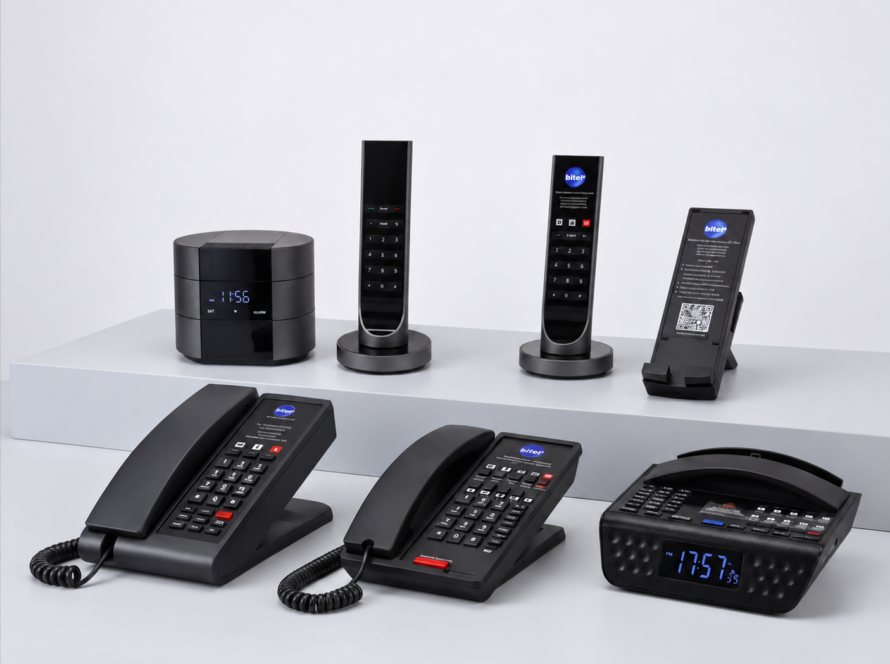
For example, the Bittel UNO PRO Analog Hotel Phone listed by TELDIS includes six programmable guest-service buttons, speakerphone functionality, adjustable volume and message waiting features.
Analogue telephones may be worth considering when the property already has compatible analogue connections and requires replacement handsets without changing its entire communications infrastructure.
However, compatibility with the existing PBX and its supported functions must be confirmed before purchasing.
SIP Hotel Phones Explained
SIP hotel phones communicate over an IP network using SIP signalling.
Rather than relying on an analogue telephone extension, a SIP handset connects to compatible network infrastructure and registers with a supported SIP telephone system.
A hotel’s SIP equipment may connect through an on-site IP PBX or an appropriately configured hosted communications service.
Depending on the model and network configuration, SIP hotel phones may support:
- Network-based telephone connectivity
- Programmable guest-service buttons
- Speakerphone functionality
- Power over Ethernet (PoE)
- Centralised device configuration
- Supported IP PBX communication features
These capabilities depend on the particular handset, PBX and network environment.
TELDIS lists the Bittel NEO Analog / SIP Hotel Phone, which is available in analogue and SIP versions. Its SIP configuration supports IEEE 802.3af Power over Ethernet.
Analogue vs SIP Hotel Phones: Comparison Table
The following comparison outlines the main technical and operational differences between the two telephone technologies.
Feature | Analogue Hotel Phones | SIP Hotel Phones |
Connection type | Compatible analogue telephone extension | Ethernet/IP network connection |
Telephone system | Analogue PBX or compatible analogue interface | SIP-compatible IP PBX or hosted system |
Cabling | Existing suitable telephone wiring | Suitable Ethernet/network cabling |
Power requirements | Often powered through the analogue telephone interface | PoE or another supported power arrangement |
Guest-service buttons | Available on selected models | Available on selected models |
Speakerphone | Available on selected models | Available on selected models |
Message waiting | Requires compatible handset and PBX signalling | Requires compatible handset and SIP/PBX configuration |
Network dependency | Depends on analogue telephone infrastructure | Depends on functioning IP network infrastructure |
Installation considerations | Extension compatibility and telephone wiring | Network configuration, SIP registration and power |
Suitable purchasing scenario | Replacing phones on existing analogue extensions | Deploying handsets on compatible SIP infrastructure |
Both systems can support hotel guest communications effectively when the hardware and underlying telephone infrastructure are appropriately matched.
When Should a Hotel Choose Analogue Telephones?
Analogue hotel telephones may be appropriate for accommodation properties with functioning analogue PBX infrastructure.
For many purchasing teams, the first question is whether the existing communication system meets the hotel’s operational requirements.
1. Your Hotel Already Uses Analogue Telephone Connections
If a property has operational analogue extensions throughout its guest rooms, compatible replacement telephones may be a practical option.
This can reduce the immediate need for changes to network infrastructure, although the condition of existing cabling and PBX equipment should still be assessed.
2. You Need to Replace Existing Guest Room Handsets
A property replacing damaged, outdated or inconsistent guest room telephones may be able to retain its current telephone infrastructure.
Before ordering, confirm:
- The type of analogue interface provided by the PBX
- The number of telephone lines required
- Supported message waiting functions
- Guest-service button programming requirements
- Handset power and installation arrangements
These checks help determine which replacement phones can operate with the existing system.
3. Your Communication Requirements Are Relatively Straightforward
Hotels requiring standard voice calling, reception shortcuts and selected guest-service functions may find suitable options among analogue hospitality telephones.
However, the availability of these features depends on the selected handset and PBX configuration.
Analogue technology alone does not determine the range of services available to guests.
When Should a Hotel Consider SIP Hotel Phones?
SIP hotel phones may be appropriate for hotels operating IP-based telephone infrastructure or planning a communications system upgrade.
They are also relevant for accommodation developments where network cabling and compatible IP communications systems are being considered during the design stage.
1. Your Hotel Has a SIP-Compatible PBX
A SIP-compatible PBX provides the foundation for connecting suitable SIP hotel telephones.
Before selecting handsets, the hotel’s IT team should confirm the PBX’s device compatibility, supported SIP functions and registration requirements.
Some systems have manufacturer-specific configuration requirements, making compatibility checks necessary even when two devices support SIP.
2. You Are Planning a Telephone System Upgrade
Hotels upgrading their communications infrastructure may consider SIP telephones as part of a broader IP-based solution.
However, the upgrade should be assessed as a complete system, including network cabling, switching equipment, power, PBX configuration and ongoing management.
Purchasing SIP handsets without confirming these requirements could create installation or compatibility problems.
3. Your Property Has Suitable Network Infrastructure
SIP telephones normally require reliable IP network connectivity.
Depending on the model, the network may also need to provide Power over Ethernet or access to a supported external power supply.
For example, the SIP version of the Bittel NEO supports PoE 802.3af.
Hotels should verify that their network switches and cabling can provide the required connectivity and power to each guest room.
Infrastructure Requirements: What Should Hotels Check?
Infrastructure compatibility is one of the most significant factors when comparing analogue and SIP hotel telephone systems.
A telephone upgrade can affect multiple areas of a property’s communications environment.
Existing Telephone Cabling
For analogue hotel telephones, review the telephone cabling and the type of connections available in guest rooms.
Existing wiring may be suitable for compatible replacement equipment, but the condition and configuration should be checked by a qualified telecommunications technician.
For SIP hotel phones, appropriate network cabling and Ethernet connectivity are generally required.
A traditional telephone socket should not be assumed to provide the network connectivity needed for a SIP handset.
PBX Compatibility
A PBX manages calls between guest rooms, hotel departments and external telephone services.
Analogue handsets require compatible analogue interfaces, while SIP telephones require suitable SIP support.
Some modern systems can accommodate both technologies through compatible equipment or interfaces.
Before choosing a new handset, identify the installed PBX, its available ports and the functions supported by the system.
Power Requirements
Power is another important difference between the two technologies.
Many analogue hotel telephones obtain operating power from their analogue telephone connection, although particular features or models may have additional power requirements.
SIP telephones may use PoE, a separate power adaptor or another model-specific supply.
If PoE is required, verify that the property’s switches can provide the appropriate power standard and sufficient capacity.
Network Reliability
SIP hotel telephones depend on the availability of the network and supporting telephone services.
Network interruptions, equipment failures or power outages can affect calling functionality.
Hotels considering SIP should review network reliability, power backup arrangements and telephone service continuity with their communications provider.
Analogue PBX systems also have infrastructure and power dependencies, so continuity requirements should be assessed for either option.
Do SIP Hotel Phones Offer Better Guest-Service Features?
Both analogue and SIP hotel telephones can provide functions designed for hospitality environments.
The available features depend on the handset model and the connected telephone system.
For example, guest-service buttons may be configured to connect guests directly with reception, housekeeping or other designated hotel departments.
Selected models can also provide message waiting indicators, speakerphones and adjustable handset volume.
Some SIP systems offer additional network-based management capabilities, although these functions depend on the handset and PBX combination.
Hotels should focus on their actual guest communication requirements before selecting a telephone technology.
A useful starting point is to identify the functions required across guest rooms and confirm which models support them.
Bittel NEO Analogue and SIP Hotel Phones
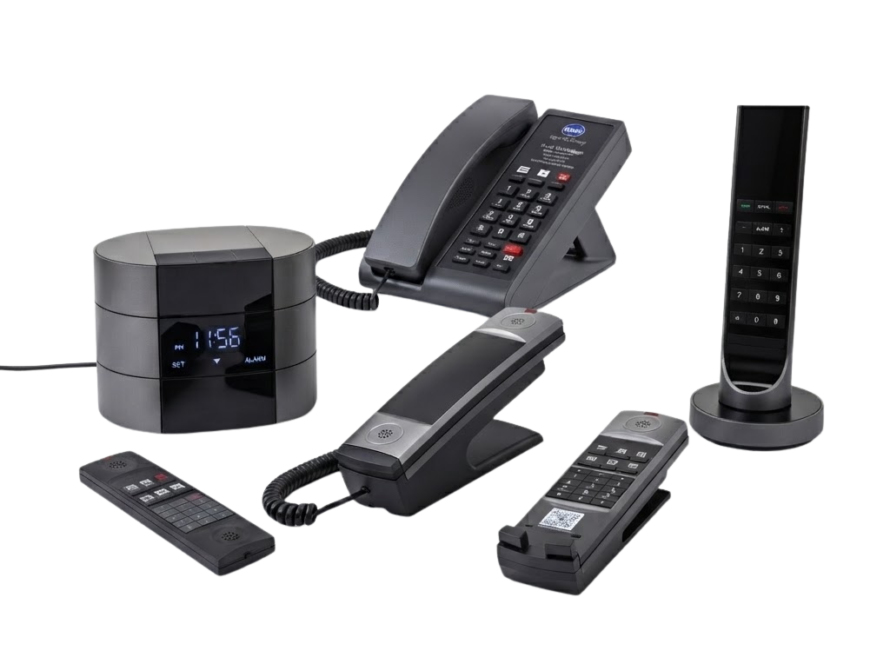
The Bittel NEO range provides an example of hotel telephone equipment available in both analogue and SIP configurations.
TELDIS lists the following product details for the range.
Specification | Bittel NEO Details |
Model references | HA62TSD / HA62TSD-IP |
Telephone technology | Analogue / SIP |
Line configurations | Single-line or two-line options |
Handset styles | Flat or curved handset |
Speaker options | Speaker or non-speaker configurations |
Guest-service keys | 3, 5 or 10 keys |
Charging | Optional charging |
SIP power | PoE IEEE 802.3af |
Colours | Multiple handset colours |
The availability of analogue and SIP versions provides purchasing teams with different configurations to assess against their existing communications systems.
However, individual specifications and optional features should be verified for the particular model being ordered.
For more information, review the Bittel NEO Analog / SIP Hotel Phone listed by TELDIS.
Other available Bittel models can be viewed in the TELDIS hotel telephone range.
Can Hotels Upgrade From Analogue to SIP Without Replacing Everything?
A transition from analogue to SIP may be possible without replacing every component of a hotel’s communications infrastructure.
The extent of the upgrade depends on the installed PBX, cabling, networking equipment and the compatibility of existing devices.
For example, some telephone environments can support a phased migration through compatible hybrid PBX equipment or suitable gateway solutions.
However, these arrangements are system-specific.
A hotel considering a phased upgrade should request a technical assessment before purchasing new telephones.
The assessment should establish which existing components can be retained, which require replacement and what configuration changes are necessary.
Questions to Ask Before Upgrading
Hotel IT managers and procurement teams should confirm:
- Does the current PBX support SIP telephones?
- Are the guest rooms equipped with suitable network connections?
- Can the network provide sufficient PoE capacity if required?
- Will existing guest-service functions operate on the new handsets?
- Are there any telephone service continuity requirements?
- Can the upgrade be completed in stages?
- Which handset models have been verified for compatibility?
Documenting the answers can help identify the scope of the proposed upgrade and potential installation requirements.
Common Mistakes When Choosing Analogue or SIP Hotel Phones
Assuming All Hotel Telephones Are Interchangeable
Hotel telephones can have similar physical designs while using different connection technologies.
A SIP handset cannot simply be assumed to replace an analogue telephone on the same connection.
Confirm system compatibility before ordering replacement equipment.
Overlooking Guest-Service Programming
Programmable buttons often require configuration within the hotel’s telephone system.
Check the supported functions and configuration process before deployment.
Ignoring Power Requirements
SIP telephones requiring PoE need compatible network switches and sufficient available power.
Failure to check these requirements can lead to installation delays.
Choosing Equipment Without Reviewing Future Plans
Hotels planning a PBX replacement, major renovation or network upgrade should consider those projects before purchasing new telephone equipment.
The timing of planned infrastructure changes can influence the most appropriate handset selection.
Ordering Before Confirming Model Specifications
Telephone models may be available in different configurations.
Confirm line options, supported functions, power requirements and current availability before placing an order.
How to Choose the Right Hotel Telephone System
The decision between analogue and SIP hotel phones should begin with an assessment of existing infrastructure and operational requirements.
For properties with compatible analogue PBX systems, analogue hospitality telephones may provide a suitable replacement option.
For hotels using SIP-compatible IP telephone systems, SIP handsets may align with existing network-based communications.
Properties planning major infrastructure changes should review both the telephone system and handset requirements before making purchasing decisions.
A structured selection process should include:
- Identifying the existing PBX technology
- Reviewing available guest room connections
- Confirming essential guest-service features
- Checking handset compatibility
- Assessing power and installation requirements
- Considering future system upgrades
- Confirming the selected product specifications
These steps can help accommodation operators select hotel telephones that support their property’s communications requirements.
Find Suitable Analogue and SIP Hotel Phones With TELDIS
Choosing the right hotel telephone equipment requires an understanding of your property’s infrastructure, communication needs and preferred handset features.
TELDIS provides a range of Bittel hotel telephones, including analogue and SIP options within the NEO range.
Accommodation operators can review the Bittel NEO Analog / SIP Hotel Phone or compare products in the TELDIS hotel telephone catalogue.
If you are reviewing replacement equipment or planning a hotel telephone upgrade, contact TELDIS to discuss your requirements and confirm current product specifications and availability.
Frequently Asked Questions
What is the main difference between analogue and SIP hotel phones?
Analogue hotel phones connect to compatible analogue telephone interfaces, while SIP hotel phones use an IP network and SIP-compatible telephone system. The correct option depends on the hotel’s communications infrastructure and required functions.
Are SIP hotel phones better than analogue phones?
Suitability depends on the existing telephone system, network infrastructure, available budget and operational requirements. Both technologies can support guest room calling and selected hospitality functions.
Can an analogue hotel phone work with a SIP system?
An analogue telephone may be able to operate within certain SIP-based environments when compatible analogue interfaces or gateways are available. Compatibility must be verified for the specific PBX and connected equipment.
Do SIP hotel phones need an internet connection?
SIP hotel telephones require access to a compatible IP network and SIP telephone service. An internet connection may be necessary for hosted or external services, while some on-site communications can operate across a local network. Requirements depend on system architecture.
Do SIP hotel phones require Power over Ethernet?
Some SIP hotel telephones support PoE, while others may use alternative power arrangements. The Bittel NEO SIP configuration listed by TELDIS supports IEEE 802.3af PoE.
Can hotels keep their existing telephone numbers when upgrading to SIP?
Retaining telephone numbers may be possible depending on the current service, telecommunications provider and number-porting arrangements. Confirm these requirements with the provider before changing systems.
Which Bittel hotel phones are available in analogue and SIP versions?
TELDIS lists the Bittel NEO Analog / SIP Hotel Phone, with model references HA62TSD and HA62TSD-IP. Buyers should confirm the exact configuration, compatibility and availability before ordering.